Die besten Werkzeuge für asynchrone Remote-Teams 2026
Die besten Werkzeuge für asynchrone Remote-Teams sind die, mit denen Arbeit ohne Meetings vorankommt. Dieser Überblick zeigt die stärksten Anwendungen für asynchrone Zusammenarbeit, Wissensmanagement und Projektverfolgung – und welches Problem verteilter Teams jede davon löst.
Die besten Werkzeuge für asynchrone Remote-Teams sind nicht die mit den meisten Funktionen, sondern die, mit denen Informationen ohne Meeting vorankommen. Verteilte Teams kämpfen 2026 mit einem klar benennbaren Problem: digitale Zersplitterung. Entscheidungen versacken in Slack-Threads, die niemand wiederfindet, der Zusammenhang eines Projekts verteilt sich über fünf Anwendungen, und neue Kolleginnen und Kollegen brauchen zwei Wochen, nur um den Anschluss zu finden. Die folgenden Werkzeuge setzen genau dort an.
Jedes ist nach Einsatzzweck eingeordnet – Kommunikation, Wissensmanagement, Projektverfolgung oder asynchrone Videos –, sodass Sie sich den passenden Werkzeugkasten zusammenstellen können, ohne doppelt zu bezahlen.
1. Buildin: KI-gestützte Wissensdatenbank und Ort der Zusammenarbeit
Wer Software für die Zusammenarbeit über Distanz vergleicht, kommt an Buildin kaum vorbei: Es ist die vielseitigste Plattform des Jahres 2026. Und es ist weit mehr als eine Notiz-App – es ist eine Umgebung, die als gemeinsames „zweites Gehirn" eines Teams funktioniert.
Ein Arbeitsplatz für konzentrierte Arbeit
Buildin löst die Zersplitterung, indem es Dokumente, mehrdimensionale Datenbanken und kreative Werkzeuge wie Mindmaps in einer Oberfläche zusammenführt. Für verteilte Teams heißt das: kein Springen mehr zwischen einem Wiki für die Dokumentation, einem eigenen Werkzeug fürs Ideensammeln und einem dritten für Aufgaben.
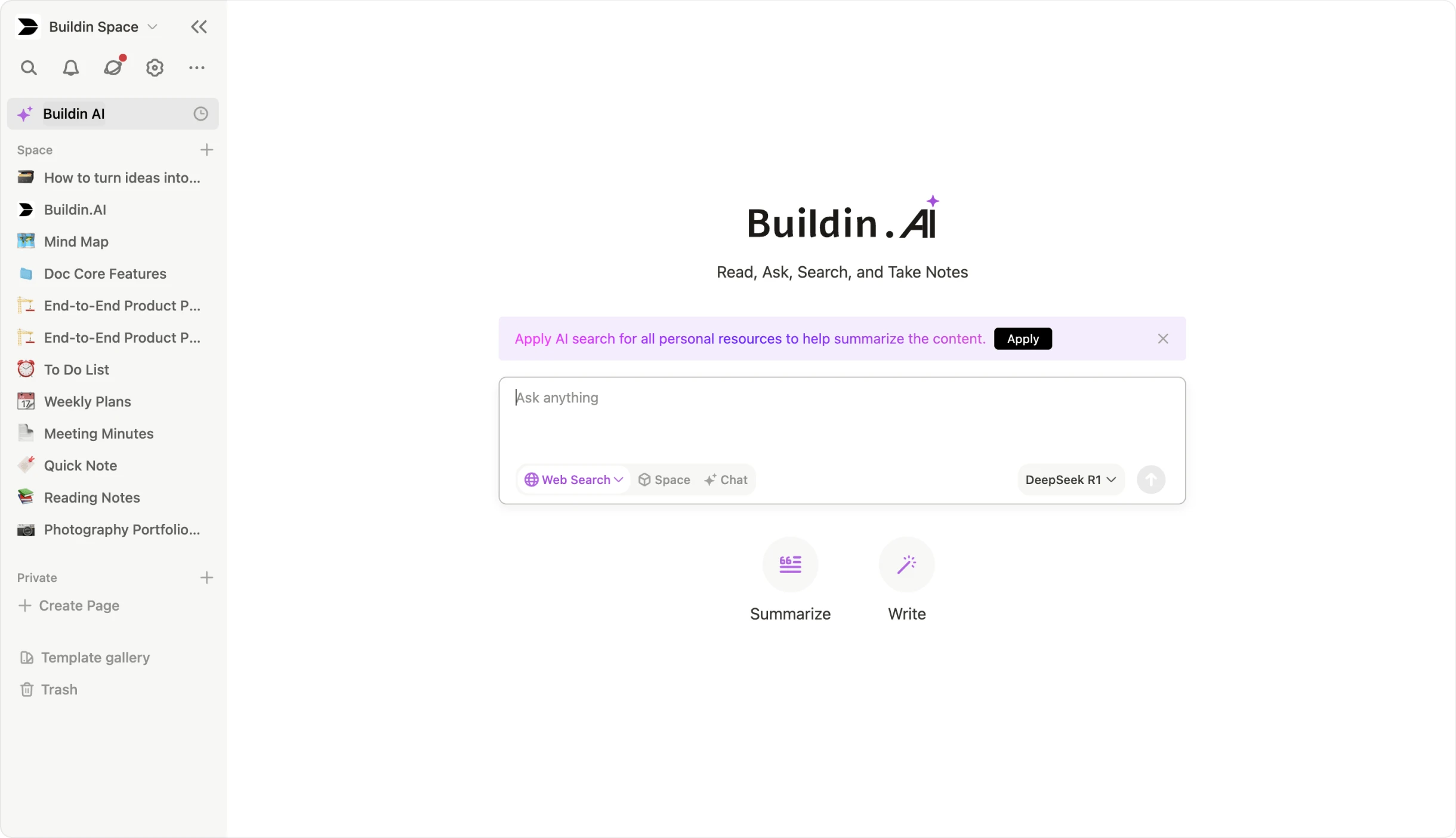
- Semantische Wissensdatenbank mit KI: Die stärkste Neuerung 2026 ist die eingebaute KI. Anders als einfache Chatbots erschließt Buildins KI den gesamten Arbeitsbereich. Wer im Homeoffice sitzt, kann fragen: „Was waren die wichtigsten Ergebnisse der Marketing-Abstimmung im dritten Quartal?" – und die KI setzt die Antwort aus Besprechungsnotizen, Projektdatenbanken und verknüpften Mindmaps zusammen.
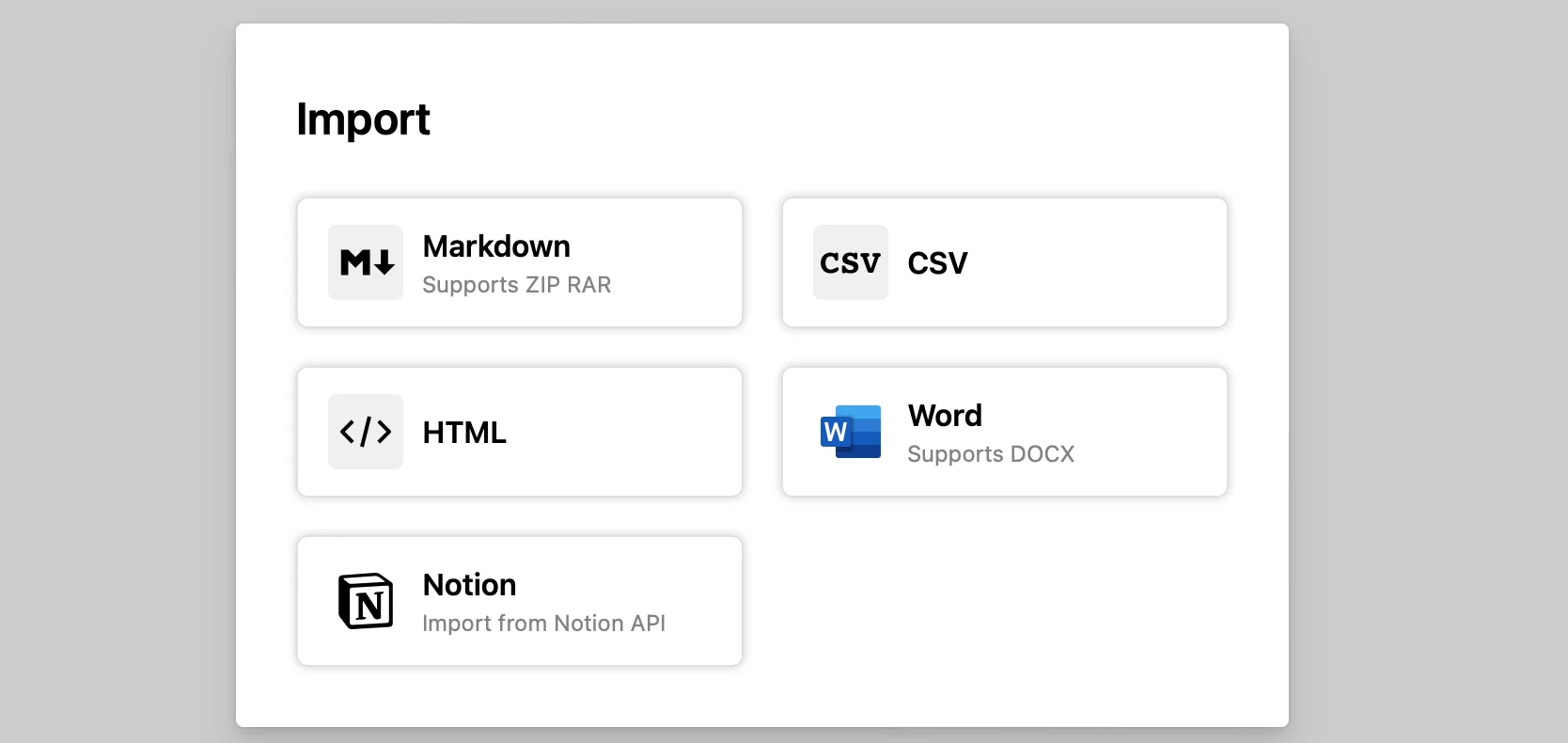
- Der beste Umzug von Notion: Viele Teams wechseln von älteren Werkzeugen wie Notion, weil die Leistung nicht mehr reicht. Buildin bietet einen direkten Import über die Notion-API. Anders als beim üblichen Markdown-Export, bei dem Formatierungen verloren gehen, bleiben dabei Datenbankbeziehungen, verschachtelte Seitenhierarchien und komplexe Blockstrukturen erhalten – für große Organisationen praktisch ein Umzug per Klick.
Rückenwind für die Creator Economy
Buildin schlägt als einziges Werkzeug die Brücke zwischen interner Zusammenarbeit und Monetarisierung von Inhalten.
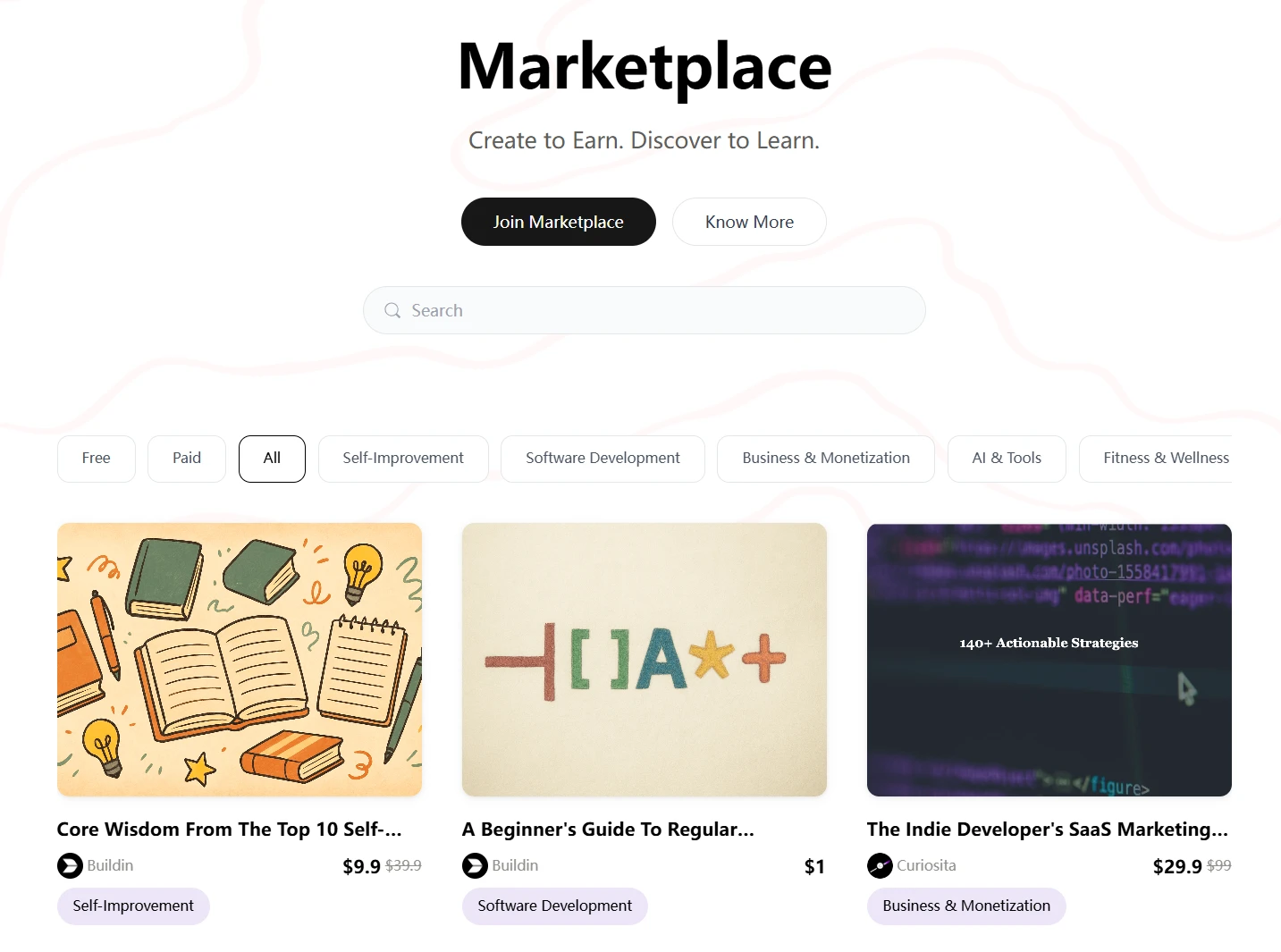
Abos von Haus aus: Teams, die Lerninhalte, Vorlagen oder Recherchen produzieren, können ihre Arbeit unmittelbar zu Geld machen. Einzelne Ordner oder Seiten lassen sich in kostenpflichtige Bereiche verwandeln.
Keine Zwischenhändler: Weil die Bezahlwege direkt eingebunden sind, entfällt der Umweg über Gumroad oder Patreon. Das macht Buildin für Bildungsangebote und digitale Produkte zum stärksten Werkzeug für verteilte Teams.
Datenschutz auf Unternehmensniveau: Betrieb im eigenen Haus
In Zeiten wachsender Datenschutzanforderungen bietet Buildin den Betrieb auf eigenen Servern an. Während die meisten Wettbewerber ausschließlich in der Cloud laufen, können Organisationen ihre Daten hier selbst hosten. Für öffentliche Auftraggeber, Finanzinstitute und den Gesundheitsbereich ist das oft keine Frage der Vorliebe, sondern eine Bedingung.
2. Slack: der KI-gestützte Puls der Remote-Kultur
Slack ist beim Austausch in Echtzeit weiterhin unangefochten, hat sich 2026 aber stark in Richtung asynchrone Kommunikation bewegt, um Erschöpfung vorzubeugen.
Weniger Rauschen dank Slack AI
Die größte Belastung für verteilte Teams ist die Nachrichtenflut. Mit den Neuerungen von 2026 kommen intelligente Kanal-Zusammenfassungen: Statt sich durch 200 verpasste Nachrichten im Kanal #projekt-launch zu scrollen, bekommen Sie von Slack AI eine Liste der getroffenen Entscheidungen, erkannten Hindernisse und verteilten Aufgaben.
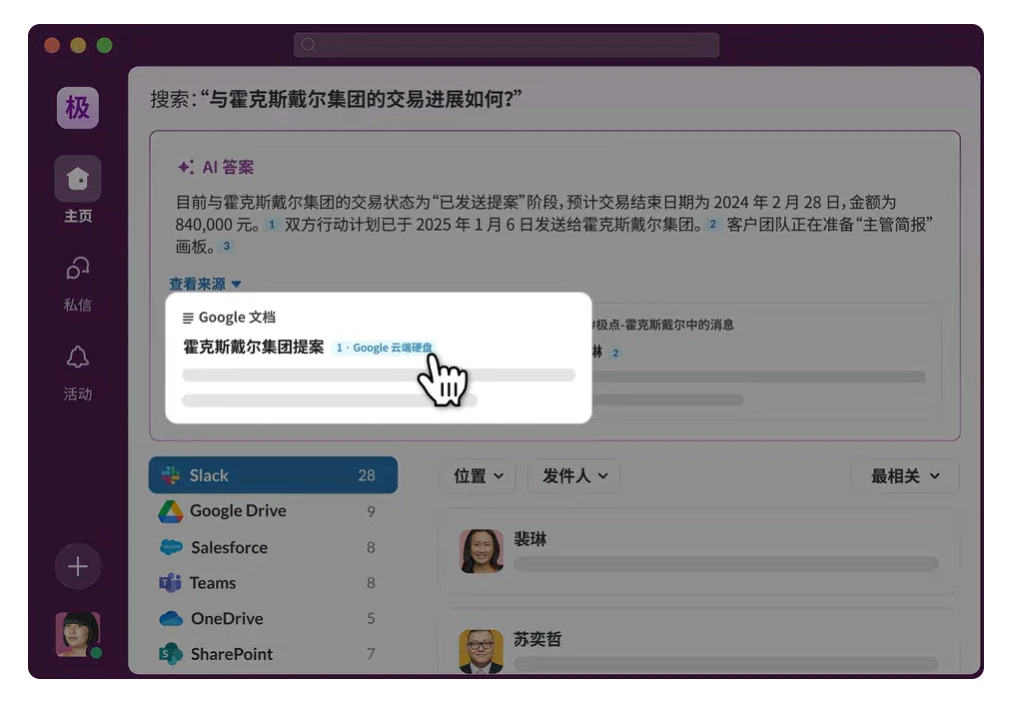
Huddles 2.0 mit KI-Transkription: Aus Huddles sind spontane Besprechungsräume geworden. Slack schreibt sie 2026 automatisch mit und legt eine durchsuchbare Fassung im Canvas des Kanals ab – so gehen Einfälle aus dem digitalen Flurgespräch nicht mehr verloren.
Workflow Builder mit KI: Sie müssen nicht mehr programmieren können, um Abläufe zu automatisieren. Aus einer Anweisung in normaler Sprache – „Wenn ein Kunde eine Datei in Box hochlädt, benachrichtige #design und lege eine Aufgabe in Asana an" – baut Slacks KI die Automatisierung sofort zusammen.
Warum es für verteilte Teams zählt
Slack ist die digitale Zentrale. Weil es sich mit praktisch allen anderen Werkzeugen dieser Liste verbindet, dient es als Benachrichtigungsschicht für Ihren gesamten Werkzeugkasten.
3. Asana: komplexe Abläufe mit KI-Teammitgliedern steuern
Je größer ein Projekt, desto schwerer die Frage: Wer macht was bis wann? Asana hat darauf 2026 geantwortet und ist von einfachen Aufgabenlisten zur KI-gestützten Ablaufsteuerung übergegangen.
„AI Teammates"
Anfang 2026 hat Asana AI Teammates eingeführt: spezialisierte KI-Helfer, die direkt in den Projektboards sitzen. Es sind keine simplen Bots, sondern Assistenten, die ihre Rolle kennen.
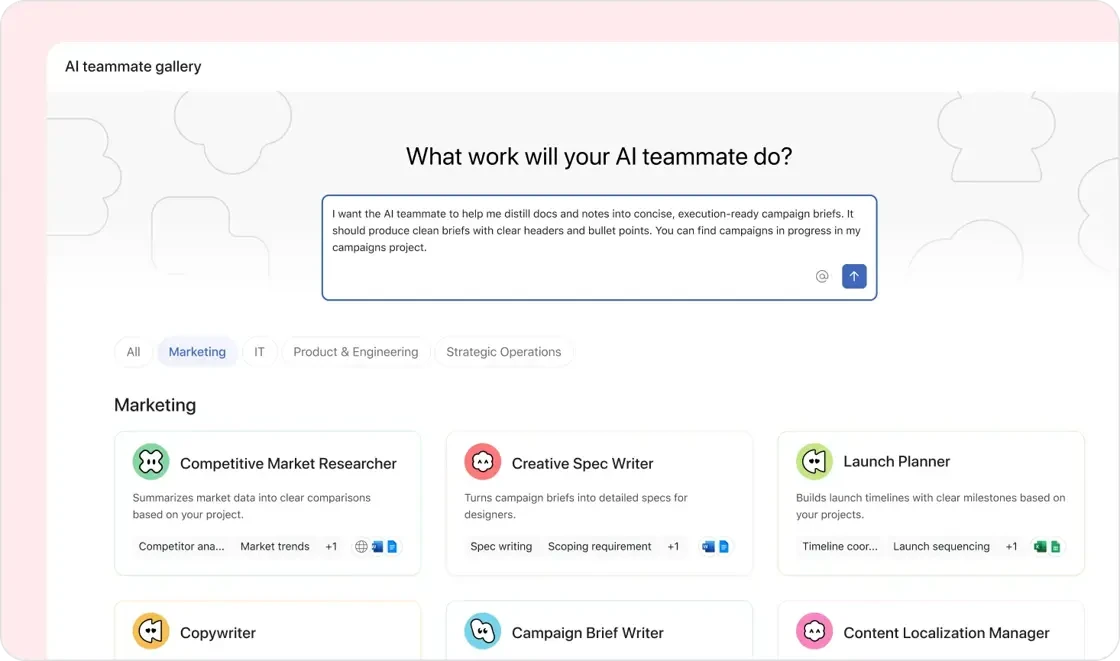
Risiken erkennen: Der KI-Helfer beobachtet den Arbeitsgraphen – also die Verbindungen zwischen Menschen und Aufgaben – und meldet, wenn eine Verzögerung bei einer Design-Teilaufgabe drei Wochen später den Produktstart kippen würde.
Statusberichte von allein: Statt dass die Projektleitung stundenlang Wochenberichte schreibt, entwirft Asanas KI sie automatisch aus abgeschlossenen Aufgaben und Ressourcendaten.
Ressourcen und Zeiterfassung
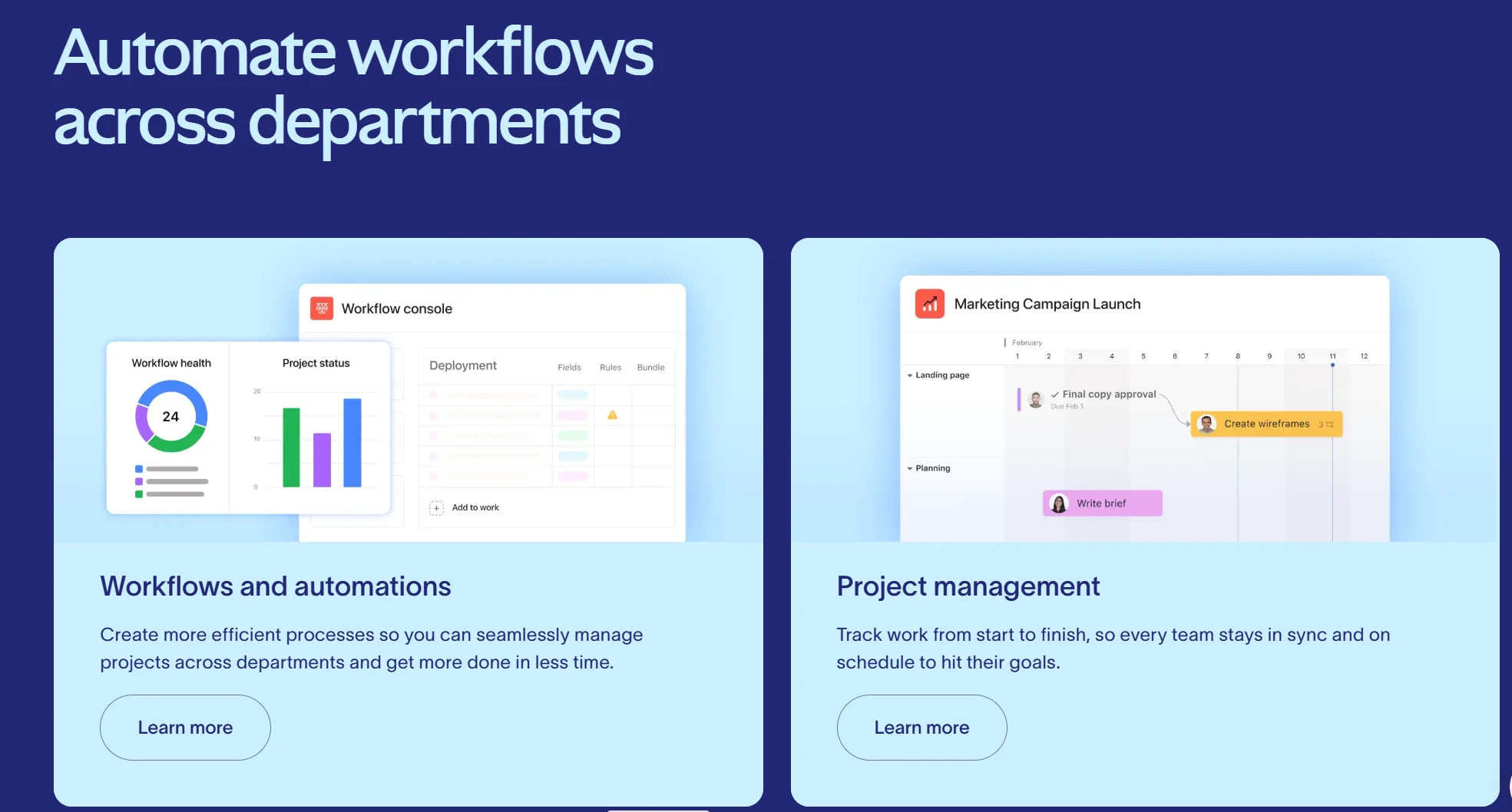
Für Agenturen mit verteilten Teams ist die Erweiterung um Timesheets und Budgets ein echter Sprung. Sie erlaubt eine zentrale Ressourcenplanung, sodass niemand überlastet wird, und zeigt zugleich in Echtzeit, wie es um die Wirtschaftlichkeit jedes Projekts steht.
4. Zoom Workplace: vom Videoanruf zum fertigen Ergebnis
Zoom heißt inzwischen Zoom Workplace und will die gesamte Lebensdauer einer Besprechung abdecken.
Zoom Docs: der KI-erste Dokumenteneditor
Die auffälligste Neuerung 2026 ist Zoom Docs. Während eines laufenden Videoanrufs schreiben die Teilnehmenden in einer Seitenleiste gemeinsam an einem Projektpapier. Danach nimmt der AI Companion 3.0 das Transkript und füllt das Dokument automatisch mit gegliederten Abschnitten, Aufgaben und Terminvorschlägen.
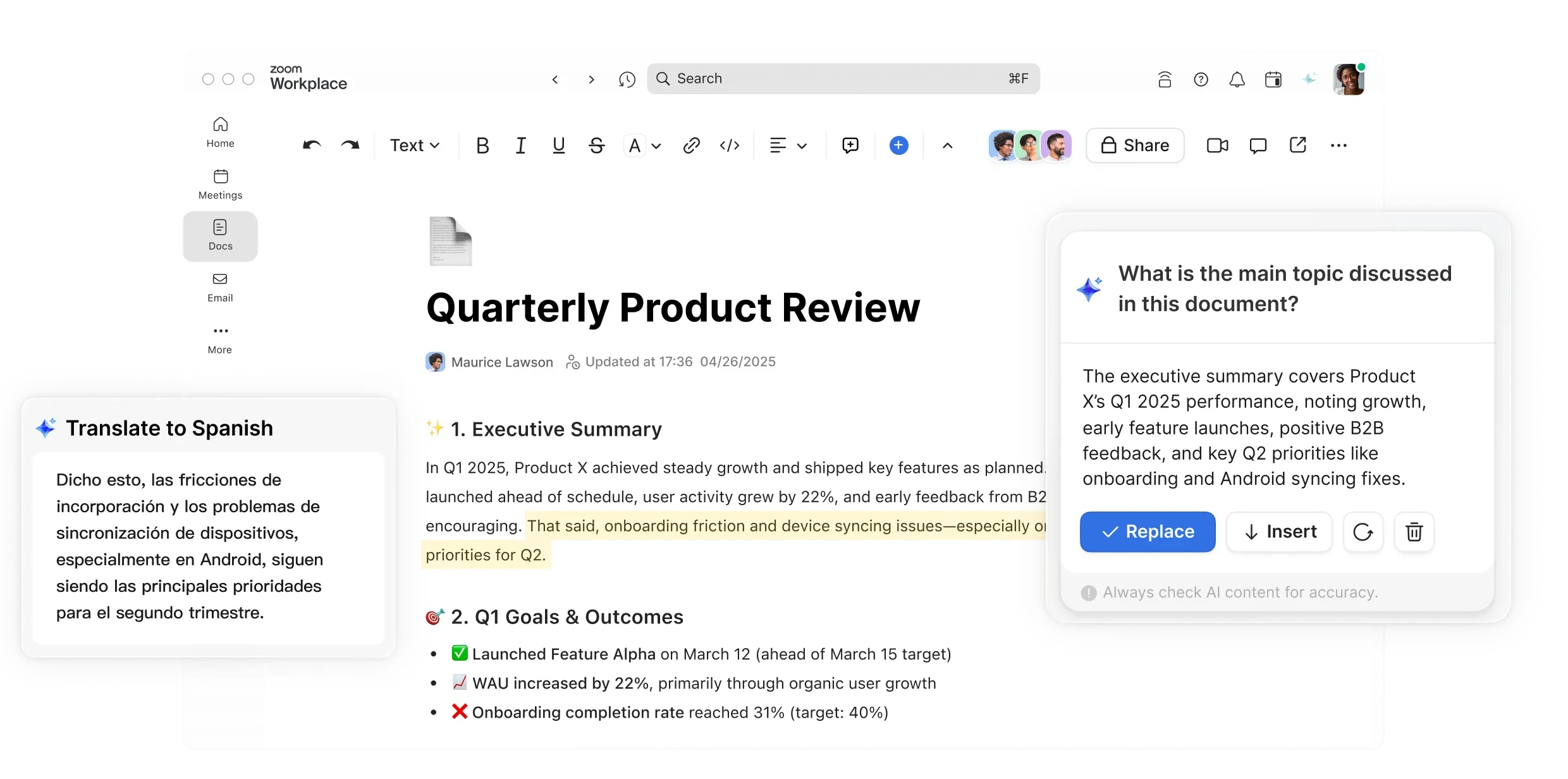
Antworten aus Ihren Quellen: Zooms KI lässt sich mit Gmail und Outlook verbinden. Kommt in einer Besprechung eine Frage auf, kann sie – mit Ihrer Erlaubnis – Ihre E-Mails durchsuchen und die Antwort live liefern, ohne dass Sie den Anruf verlassen.
Mehrsprachige Avatare: Für international verteilte Teams bietet Zoom KI-Avatare an, die Ihre Präsentation in mehreren Sprachen halten und dabei Stimme und Erscheinung beibehalten.
5. Miro: der visuelle Raum für Strategie
Visuelle Zusammenarbeit ist das fehlende Glied in der Remote-Arbeit. Miro bietet eine unendliche Leinwand, auf der verteilte Teams so zusammenarbeiten können, als säßen sie im selben Raum.
KI-Abläufe für Neues
2026 hat Miro AI Workflows eingeführt, die den Weg von der Idee zum Ergebnis deutlich verkürzen.
Aus Chaos wird Struktur: Ein Team wirft 50 ungeordnete digitale Haftnotizen auf ein Board. Ein Klick genügt, und Miros KI gruppiert sie nach Thema, erkennt Muster und macht aus der Sammlung ein strukturiertes Jira-Backlog oder eine Roadmap.
Diagramme aus Skizzen: Miro erkennt grobe Handzeichnungen und wandelt sie in saubere Flussdiagramme und Architekturbilder um – ideal für verteilte Entwicklungs- und Designteams.
Fazit: den eigenen Werkzeugkasten zusammenstellen
Wer 2026 wirklich vorankommen will, sollte über einzelne Werkzeuge hinausdenken und Systeme bauen. Mit Buildin als Wissenszentrum und darauf aufgesetzten Spezialwerkzeugen für Kommunikation und Projektsteuerung entsteht eine belastbare, skalierbare und leistungsfähige digitale Organisation.
Bereit, das Wissen Ihres Teams an einem Ort zu bündeln? Probieren Sie Buildin aus und starten Sie noch heute Ihre kostenlose Testphase.

Sency Shen
Skilled in content structuring, topic breakdown, and background research, with a strong interest in knowledge management and content workflows. Responsible for research, information organization, and foundational content preparation at Buildin.