Checklist templates: 8 lists for work and everyday life
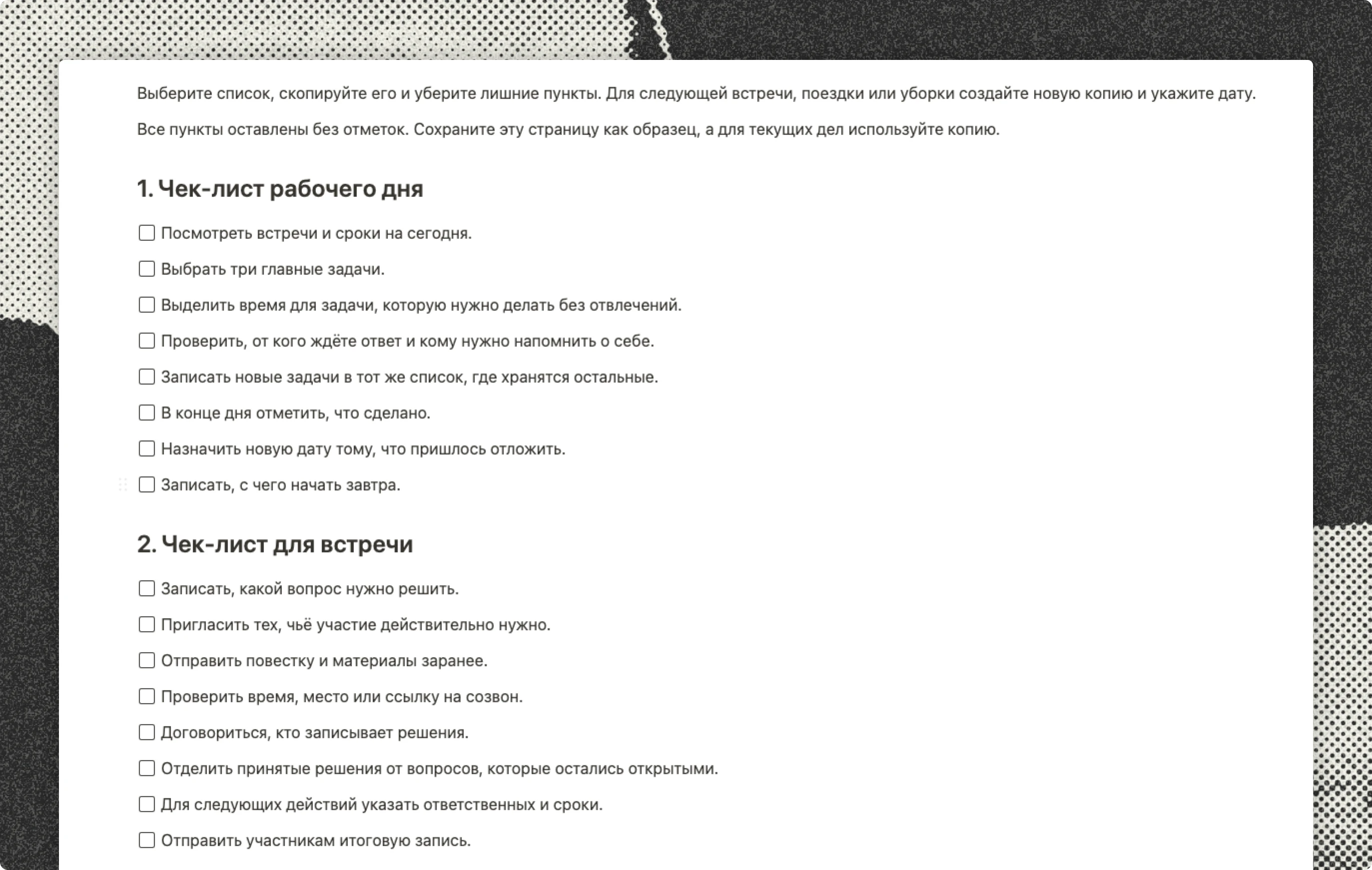
Eight complete checklists you can copy, from preparing a meeting to packing for a trip. Each has eight steps and practical notes.
Checklist templates: 8 lists for work and everyday life
A meeting ends without anyone agreeing who does what next. Before a trip, you leave your charger on the table instead of putting it in your bag. A short checklist helps you catch these things before they become a problem.
Here are eight lists for common work and household tasks. Pick one, remove what doesn’t apply and add your own steps. Each list is included in full, so you can copy it into a document or note.
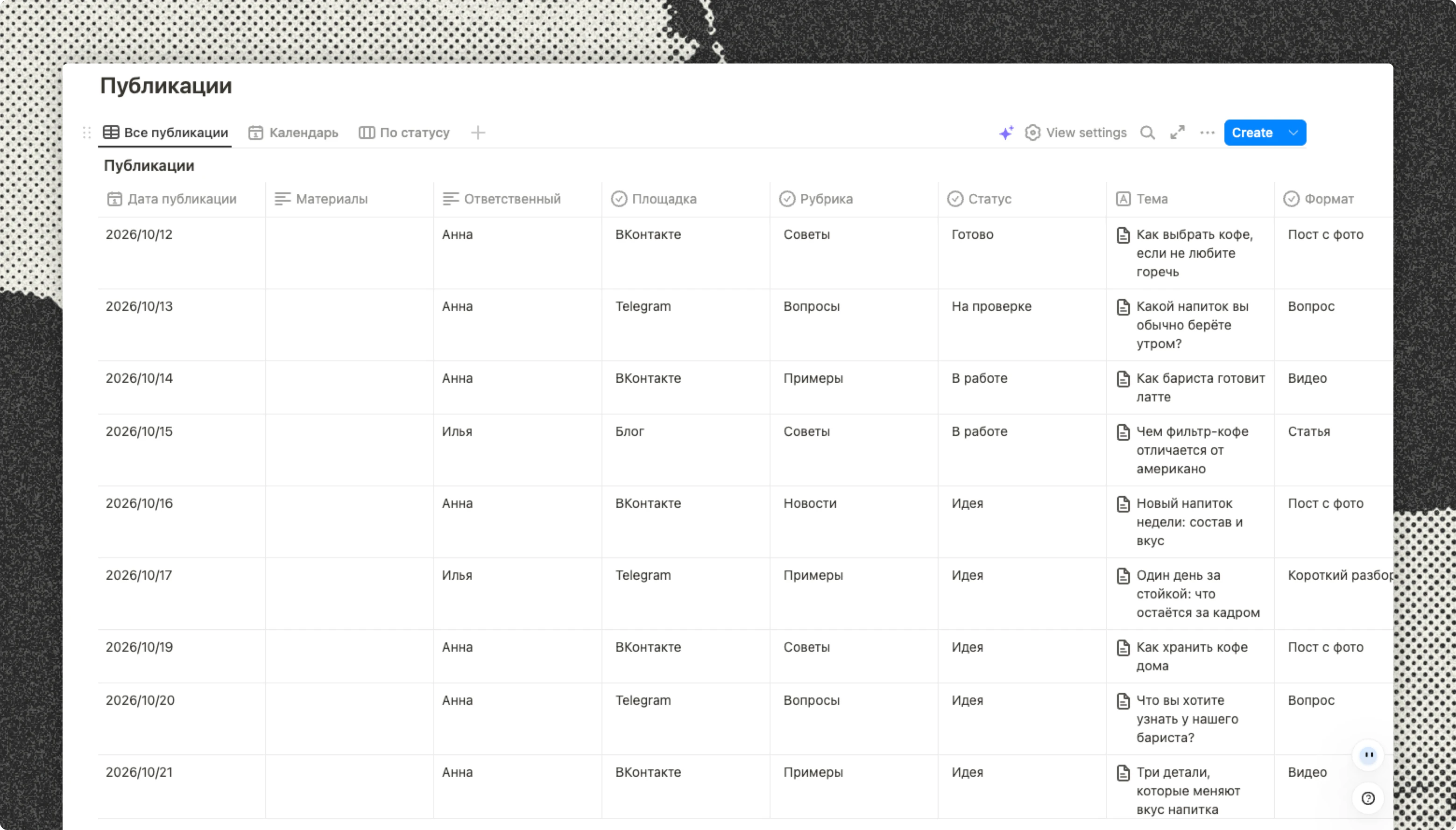
The screenshot shows the Russian template. An English version is also available.
Open the Buildin template
Use the English template or open the Russian version. On the share page, choose Duplicate to add a copy to your workspace, then replace the examples with your own.
Find the list you need
| Task | Use this list | When to check it |
|---|---|---|
| Start and finish work | Workday | In the morning and before signing off |
| Prepare a meeting | Meeting | Before the meeting and just after it |
| Clean your home | Weekly cleaning | On a day that suits you |
| Pack for a trip | Travel | The day before you leave |
| Move home | Moving | While packing and handing over the property |
| Buy groceries and household supplies | Shopping | Before leaving and while shopping |
| Run a small event | Event | During preparation and before it starts |
| Publish an article or post | Publishing | Before and after publication |
1. Workday checklist
- Check today’s meetings and deadlines.
- Choose your three main tasks.
- Set aside uninterrupted time for focused work.
- Check who owes you a reply and who needs a reminder.
- Put new tasks in the same place as the rest.
- At the end of the day, mark what you finished.
- Set a new date for anything you postponed.
- Write down where to start tomorrow.
You don’t need to move your whole month’s workload here. This is a quick check at the start and end of the day. Keep the tasks themselves in a separate list, such as the task tracker template.
2. Meeting checklist
- Write down the question you need to resolve.
- Invite the people whose input is needed.
- Send the agenda and materials in advance.
- Check the time, venue or call link.
- Agree on who will record the decisions.
- Separate decisions from questions that remain open.
- Give each next action an owner and a deadline.
- Send the notes to the participants.
“Look at the images” is hard to act on. “Anna will replace the cover by Friday” is something you can check. Before ending the meeting, make sure the next steps are written that clearly.
3. Weekly cleaning checklist
- Put away things left on tables and floors.
- Wipe kitchen surfaces and clean the sink.
- Check the food in the fridge.
- Clean the bathroom sink and frequently used surfaces.
- Vacuum or sweep the floors.
- Do the laundry and change bed linen if it’s due.
- Take out the rubbish and replace the bags.
- Note any cleaning products or supplies to buy.
Split the steps by day or room if that works better. For separate daily tasks and a weekly schedule, try the home cleaning template.
4. Travel checklist
- Check the documents you need and the official entry requirements.
- Check your tickets and accommodation booking.
- Save addresses and important contact details.
- Choose clothes for the weather and your plans.
- Pack your phone, charger and any adapter you need.
- Pack the personal items you’ll need on the journey.
- Plan how to reach the station or airport.
- Before leaving, check windows, doors and appliances that need switching off.
This is a packing checklist; entry documents depend on your destination. You can keep your itinerary, expenses and packing list together in the trip planner template.
5. Moving checklist
- Pick a date and arrange transport.
- Sort out the things you won’t take with you.
- Label boxes by room and give them numbers.
- Keep documents and valuables separate.
- Pack a bag with what you’ll need on the first evening.
- Confirm what needs doing before handing over your old home.
- Check the keys and record any agreed handover details at the new home.
- Update delivery addresses where needed.
“Kitchen, box 1” is more useful than “Miscellaneous.” Your first-evening bag should hold the things you won’t want to hunt for in boxes: a charger, a change of clothes and toiletries.
6. Shopping checklist
- Check what you already have at home.
- Set a budget for this shop.
- Divide the list into groceries, household supplies and personal items.
- Write down item names and quantities.
- Mark the essentials and what can wait.
- If someone is shopping with you, divide up the items.
- Tick off purchases as you go.
- Note anything you couldn’t find and need to buy later.
If you buy much the same things each time, save a basic list and adjust the quantities. The shopping list template has space for categories and prices.
7. Small event checklist
- Decide the purpose, date and approximate number of guests.
- Arrange a venue or choose an online meeting platform.
- Set a budget and list the main costs.
- Assign invitations, materials and on-site coordination.
- Send guests the time, address or meeting link.
- Check the equipment and prepare the materials.
- Write a short running order.
- Afterwards, clear up, total the costs and collect feedback.
This list works for a small gathering, presentation or team event. With a larger group, each step needs an owner and a deadline as well as a checkbox.
8. Article or post publishing checklist
- Check that the headline matches the content.
- Verify names, dates, figures and sources.
- Check image permissions and any required credits.
- Open the links and check their destinations.
- Review the text and layout on a phone.
- Check the account and publication time.
- Once it’s live, open the post and check the links again.
- Record the result you were aiming for: replies, clicks or another action.
A checklist covers the final checks. For topics and dates across several posts, use a content plan.
Adapt a checklist to your work
Remove steps you don’t need and put the rest in the order you’ll do them. If one item contains two separate actions, split it. “Prepare the meeting and send the notes” works better as one step before the meeting and another afterwards.
Write steps you can tick off with confidence. “Prepare well” is vague; “Send the agenda” is clear. Add an owner when several people use the list, and a date when one is needed.
Use the checklist again
Keep a blank original. For the next trip, meeting or cleaning session, make a copy and add the date. That keeps old ticks separate from the next check.
Common questions
How is a checklist different from a to-do list?
A to-do list usually records work you need to do now. A checklist often repeats in the same situation, such as before a meeting, trip or publication. You can use both together.
How many steps should a checklist have?
As many as the check needs. These lists each have eight steps, but that’s not a rule. If you skip half the items every time, shorten the list.
Can I print these lists?
Yes. Copy the list into a document, adjust the layout and print it. This article doesn’t include a separate PDF download.
How do I know whether a checklist is useful?
You reach for it without a reminder and forget fewer important steps. If the list is too long or ticking a box tells you little, revise the items.

Buildin Team
Shares the latest Buildin updates, product releases, and usage guides, along with practical insights into knowledge management, content creation, team collaboration, and the evolution of AI. Content is based on real product development and user feedback, helping teams work more efficiently with Buildin.