SEO Roadmap Template
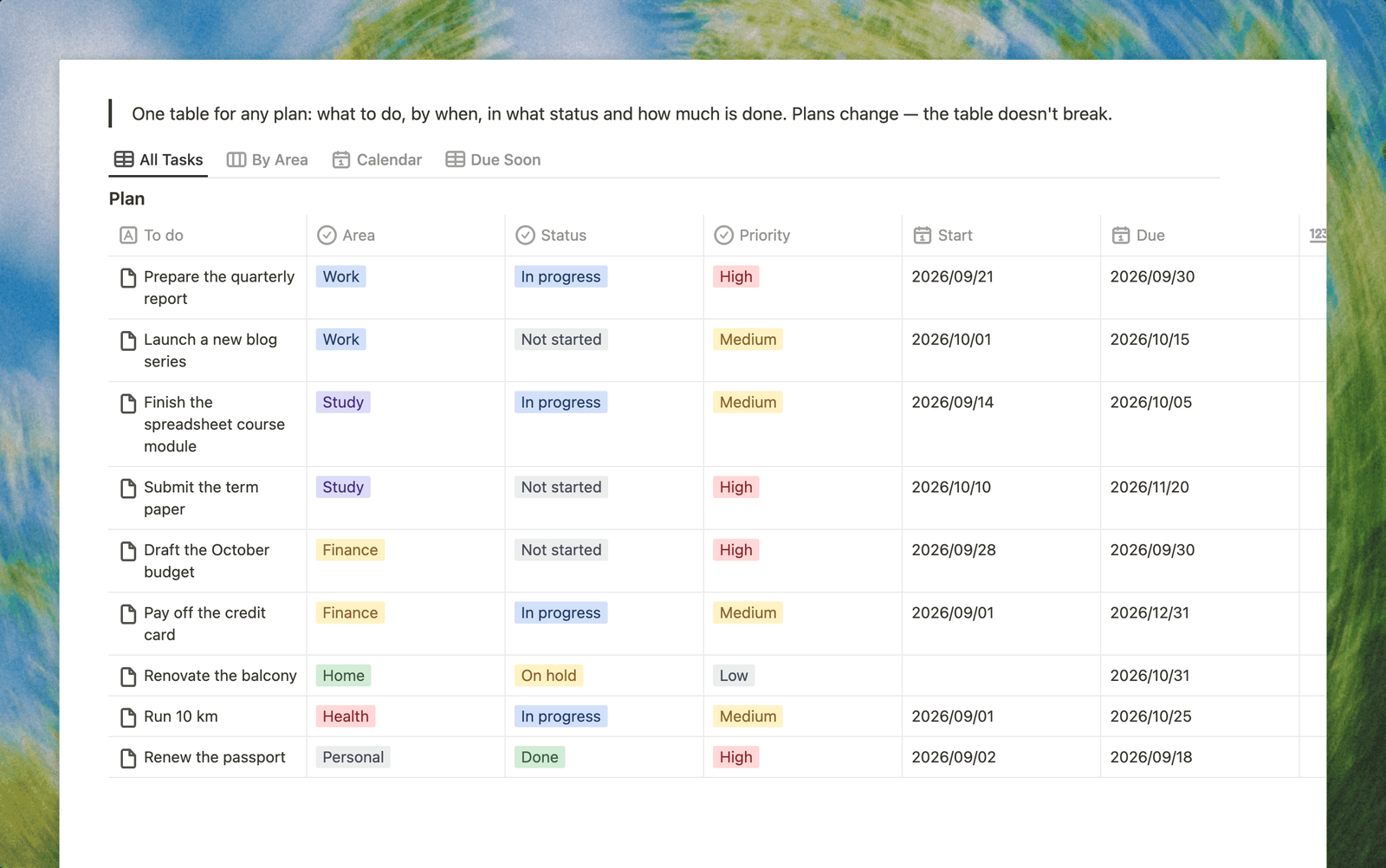
Keep manual SEO checks, implementation tasks and query evidence together. Give each issue an owner, a review date and a clear acceptance criterion.
This SEO roadmap template connects manual audit findings to implementation tasks, owners and review dates. An audit is useful when someone can turn a confirmed finding into a task, verify the fix and trace the result back to its source. Keep those steps together instead of maintaining separate audit and task lists.
What is included?
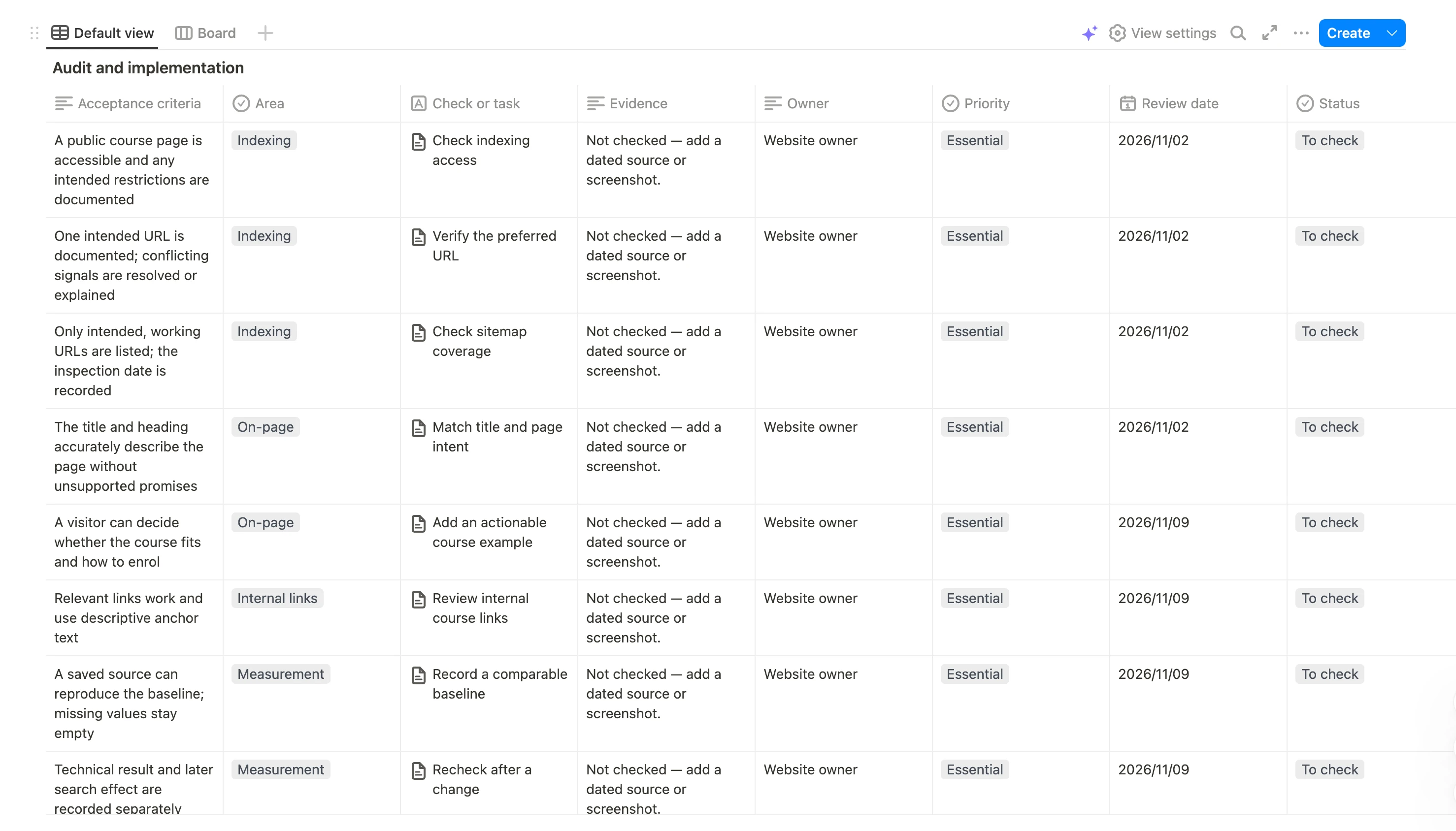
- An audit and implementation table with eight sample checks. Review indexing access, preferred URLs, sitemap coverage, page intent, useful content, internal links, a measurement baseline and follow-up checks.
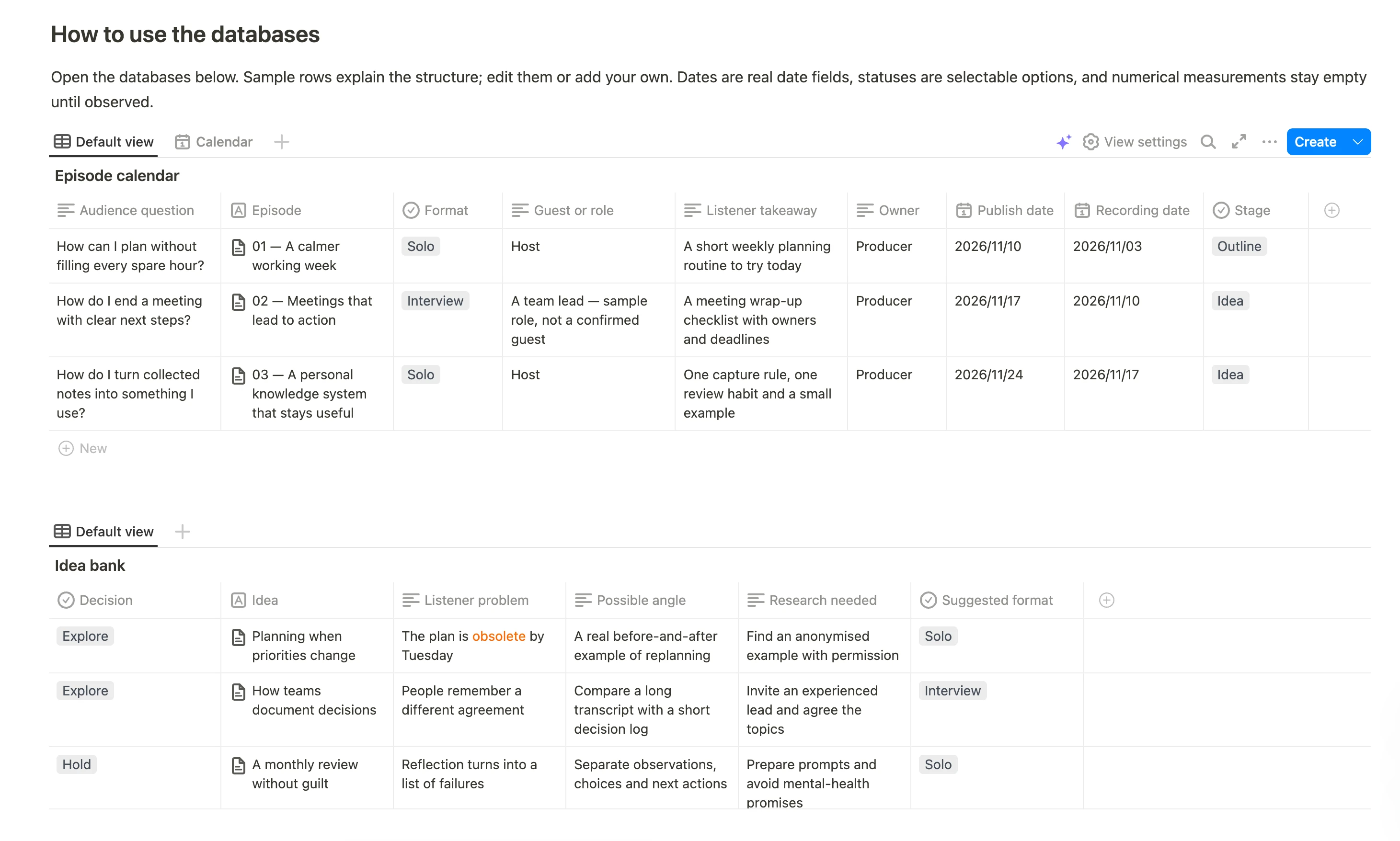
- A queries and evidence table with three sample queries. Keep the intended page, search intent, market, engine, measurement window and next step beside the query.
- A task board. Switch from the audit table to the board to review work by status.
- A project brief and review prompts. State the site, audience and outcome, then choose the few confirmed issues that matter now.
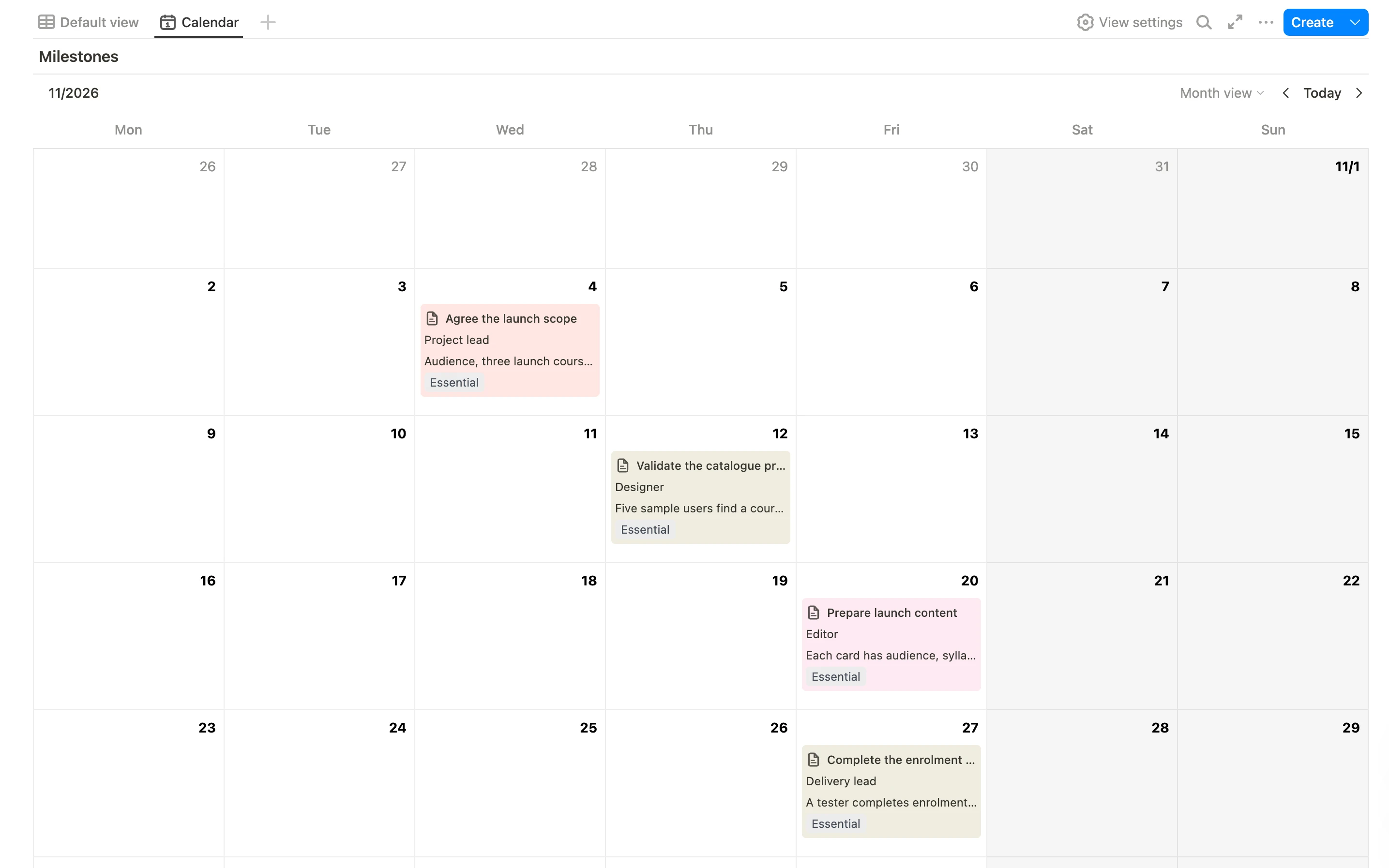
Each task has a scope, owner role, priority, review date, status, evidence and acceptance criteria. The course-site examples are fictional prompts for investigation. They do not claim that a real website has those defects.
SEO audit checklist: three example tasks
Use this small sample to understand the format. Run each check yourself before recording a defect or setting a task to confirmed.
| Check | Evidence to record | Acceptance criterion |
|---|---|---|
| Indexing access | Dated response, robots rules and page directives | Intended public pages are accessible; restrictions are documented |
| Preferred URL | Redirect and canonical observations for the target page | One intended URL is documented and conflicting signals are resolved or explained |
| Sitemap coverage | Sitemap URL, inspection date and affected page URLs | Intended working pages are listed |
The full template adds page-intent, content and internal-link checks, a comparable baseline and a follow-up review. Measurements come from your tools; the template records them with their source.
How to turn an audit into work
- Define the website, market, search engine and pages in scope.
- Run a check using your own tools. Add a dated source or screenshot before deciding that a fix is needed.
- Choose up to three priorities, assign owners and write a checkable acceptance criterion.
- Record what changed and when. Verify the technical result after release.
- Review search performance later using comparable sources, filters and date windows.
For example, “Fix sitemap” is not enough. Record the affected URL, the observed problem and how you will verify the intended public pages are listed and accessible.
Evidence without invented metrics
The sample query records leave unmeasured positions and clicks empty. Fill them only after you have a real source. Record the export window and market so a later comparison uses the same basis.
This is a work-management template. It does not crawl websites, connect to a search console, collect rankings or guarantee a traffic increase. You bring the source data and decide which findings warrant work.
Who is it for?
Use it as a solo marketer, content lead or small team coordinating SEO work with developers. If you only need a general publishing schedule, use your existing content plan and keep technical findings here.
Common questions
Can it replace an SEO audit tool?
No. Use your own tools for crawling and measurement. This workspace records the evidence, work and review decisions.
Do I need to complete every sample check?
No. Verify that a check is relevant to your website first. Remove irrelevant examples and add the issues supported by your evidence.
Does “done” prove an SEO improvement?
No. A technical fix can be verified before enough search data exists to judge its effect. Record those two checks separately.