Procrastination: 7 Methods to Help You Start Today
7 practical methods to beat procrastination: start small, break down the task, set up your environment, and use timeboxes today.
You have an important task. You know it needs to get done, and you know the deadline is approaching. But you just can't start. You pick up your phone, open the refrigerator, or tidy your desk. Time passes, and the task remains untouched.
That's procrastination.
Procrastination isn't laziness. Laziness is when you don't want to do anything. Procrastination is when you want to act but can't. Psychological research shows that its root cause isn't time management but emotional regulation. A task triggers anxiety, boredom, or self-doubt, and to avoid those feelings, the brain chooses to avoid the task itself.
The good news is that you can overcome procrastination, and it doesn't require willpower. Below are seven methods you can put into practice today.
Procrastination: Why Willpower Alone Isn't Enough
Many people think procrastination comes from a lack of self-discipline. They blame themselves and swear they'll try harder next time. But when next time comes, the same thing happens again.
The reason is simple: the real enemy behind procrastination isn't the task; it's the emotions. Willpower can suppress emotions for a while, but it won't last. The emotions remain, and the procrastination returns.
So the right approach isn't to “become more disciplined,” but to “lower the cost of getting started.” All seven methods below are built around this one idea.
Method 1: Use the Two-Minute Rule
Shrink the task down to an action you can complete in two minutes.
Not “write the report,” but “open the document and draft three subheadings.”
Not “go to the gym,” but “put on your sneakers.”
Not “learn a foreign language,” but “learn five words.”
Why it works: getting started is the hardest part. When an action is so small that your brain doesn't resist it, you begin. And once you've started, you're likely to keep going through momentum.
Try it today: choose a task you've been putting off, write down its two-minute version, and do it right now.
Method 2: Break a Large Task into Smaller Parts
“Study for the exam,” “finish my thesis,” and “complete the project” are all too big and vague. Your brain can't find the first step, so it chooses escape instead.
What to do: break the large task into small steps. Each step should take 15–30 minutes and describe a specific action.
Take “write my thesis” as an example:
- Create an outline (20 minutes)
- Gather three sources (30 minutes)
- Draft the first section (30 minutes)
- Edit the first section (20 minutes)
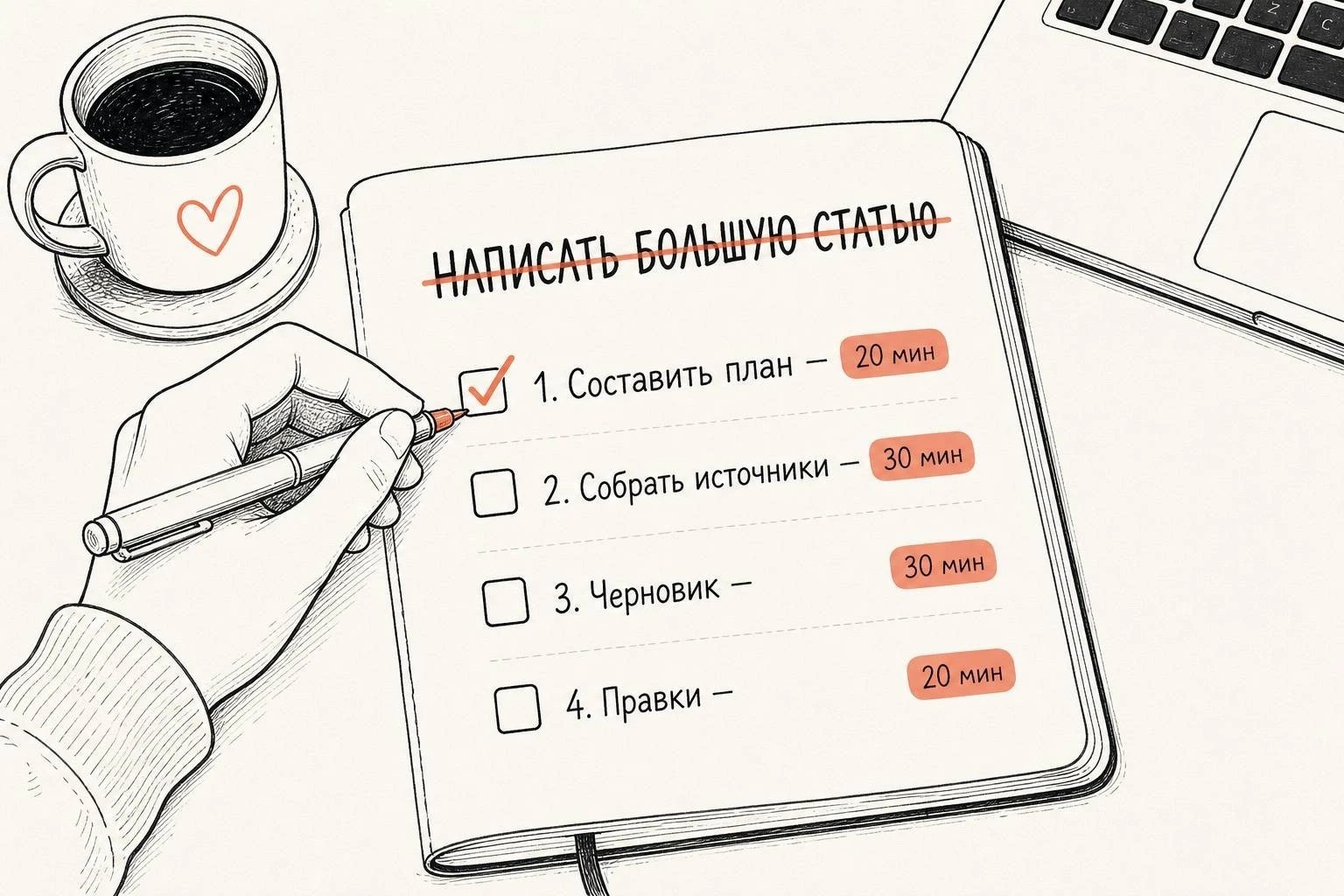
Why it works: uncertainty creates anxiety, while clarity eases it. Once you break the task down, you no longer face a mountain—only the next step.
Method 3: Do It First, Then Make It Perfect
Much of procrastination grows out of perfectionism. You want so badly to do a good job that you're afraid of doing a bad one, so you never begin.
The solution: give yourself permission to make the first version bad.
Writers have a technique: start with a “bad first draft.” The draft's only purpose is to exist. Whether it's good is a question for the editing stage.
Why it works: “doing it” and “doing it perfectly” are two different tasks, and they need to be handled separately. The first pass is only about finishing; the second is about improving. When you mix them together, you accomplish neither.
Try it today: set a “bad version” goal for the task you're avoiding—for example, “write a draft that deserves a C at best.”
Method 4: Set Up Your Environment Instead of Testing Yourself
What distracts you depends on what's around you. If your phone is on the desk, you'll pick it up. If a video tab is open, you'll click it.
What to do: spend one minute preparing your environment before you start working.
- Put your phone in another room, or at least silence it and place it face down.
- Close any tabs and notifications unrelated to your current task.
- Leave only what you need for the task on your desk.
The reverse is also true: reduce friction for the things you want to do. Want to run in the morning? Put your sneakers by the door the night before. Want to read? Leave the book on your pillow.
Why it works: setting up your environment is one decision that works all day. Willpower is an exhausting battle fought minute by minute. Smart people choose the first option.
Method 5: Work in Timeboxes
The plan “I'll work for eight hours today” makes your brain look for an escape. Replace the long workday with a short timebox: work for 25 minutes, then rest for five. This is the well-known Pomodoro Technique.
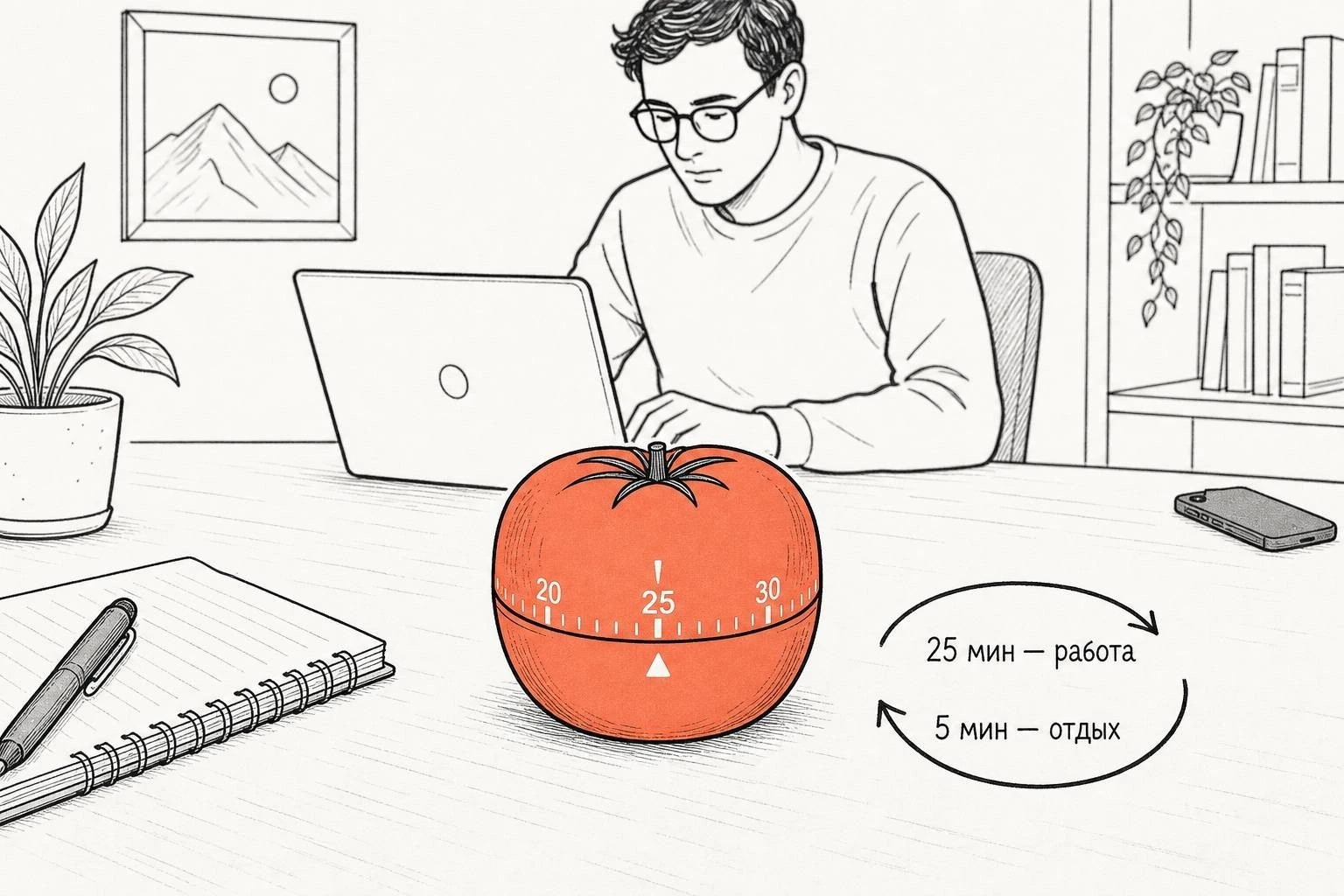
The key word here is “only.” Your goal isn't to finish the task; it's simply to avoid distractions for those 25 minutes. It doesn't matter how large the task is: a timebox manages time, not results.
Why it works: people are sensitive to endings. When you know you can rest in 25 minutes, starting becomes easier. And more often than not, when those 25 minutes are up, you'll want to continue.
Try it today: set a timer for 25 minutes and work on one thing. When time runs out, decide whether to continue.
Method 6: Add a Commitment Device
A promise to yourself is the easiest promise to break because breaking it has no cost. That's why you need external support.
Three simple approaches:
- Tell someone your deadline. For example, tell a friend, “I'll send you the draft by Friday.”
- Arrange to work together. When two people start at the same time and can see each other, their effectiveness improves noticeably.
- Set a cost for putting the task off. For example, if you don't finish, you send a set amount of money to a friend.
Why it works: procrastination thrives in private and when it's free. A public commitment plus a specific cost makes escape expensive.
Method 7: Keep a Record and Forgive Yourself
The last technique is a little counterintuitive: stop criticizing yourself.
Research shows that people who harshly criticize themselves after procrastinating are more likely to procrastinate again. Those who forgive themselves are less likely to repeat it. The reason is direct: self-criticism creates anxiety, and anxiety fuels procrastination.
What to do: at the end of each day, spend two minutes writing three lines:
- What did I put off today?
- What was I feeling at the time?
- What will my first step be tomorrow?
Write down facts only, without judgment. After a week, you'll see your procrastination patterns: what time they appear, which tasks trigger them, and which emotions accompany them. Once you can see the pattern, you can address it precisely.
When to Seek Professional Help
Occasional procrastination is normal. It happens to everyone.
But if your procrastination is long-lasting and severe, already affects your studies, work, and relationships, and comes with intense guilt and anxiety, it may be more than a habit. ADHD (attention-deficit/hyperactivity disorder), depression, and anxiety disorders often show up as severe procrastination.
In that case, consider talking to a psychologist or doctor. That's not a sign of weakness; it's an effective way to address the problem.
Frequently Asked Questions
What's the Difference Between Procrastination and Laziness?
Laziness is when you don't want to do anything and it doesn't bother you. Procrastination is when you want to act and care about the task, but you can't begin and suffer because of it. A lazy person rests without a burden; a procrastinator rests with guilt.
Is Procrastination an Illness?
No. Procrastination is a behavioral habit, not a medical diagnosis. But it can be one sign of ADHD, depression, or an anxiety disorder. If the procrastination is severe and persistent, it's best to seek a professional assessment.
Why Is It Easier to Put Off More Important Tasks?
Because important tasks create more emotional pressure: fear of failure, fear of doing a poor job, and fear of being judged. The greater the pressure, the more your brain wants to escape. That's why it's especially important to “break down” important tasks and start them with the “two-minute rule,” first reducing the pressure to a level where you can begin.
Conclusion: Start with the Smallest Step
You don't need to change completely in a single day to overcome procrastination. One small action today is enough.
You can do one thing right now: choose one method from this article and apply it to something you've been putting off. Two minutes is enough.
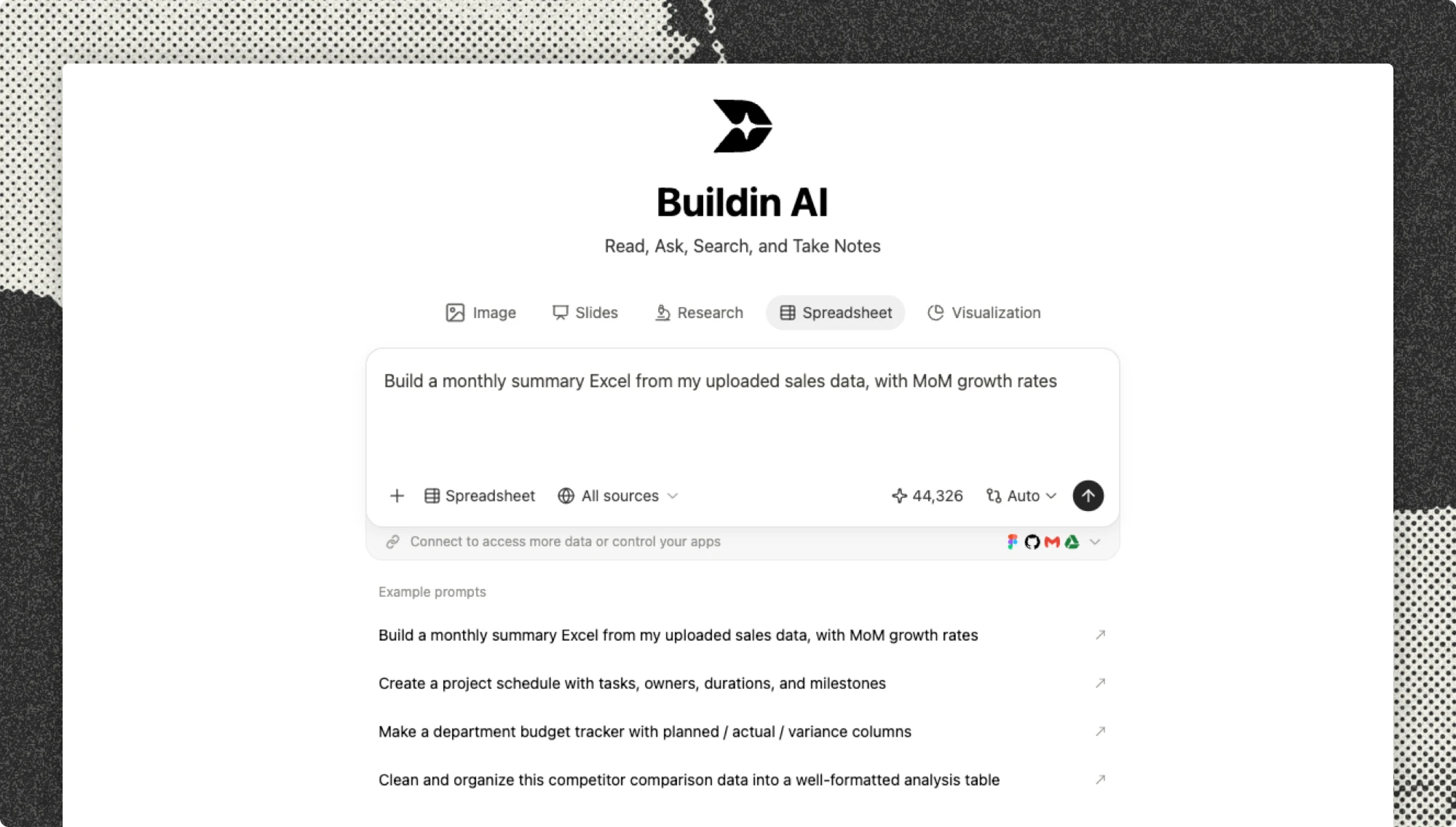
If you want to make these methods easier to follow, you can bring them directly into Buildin. Buildin is an all-in-one workspace that brings your tasks, notes, goals, and habits together in one place.
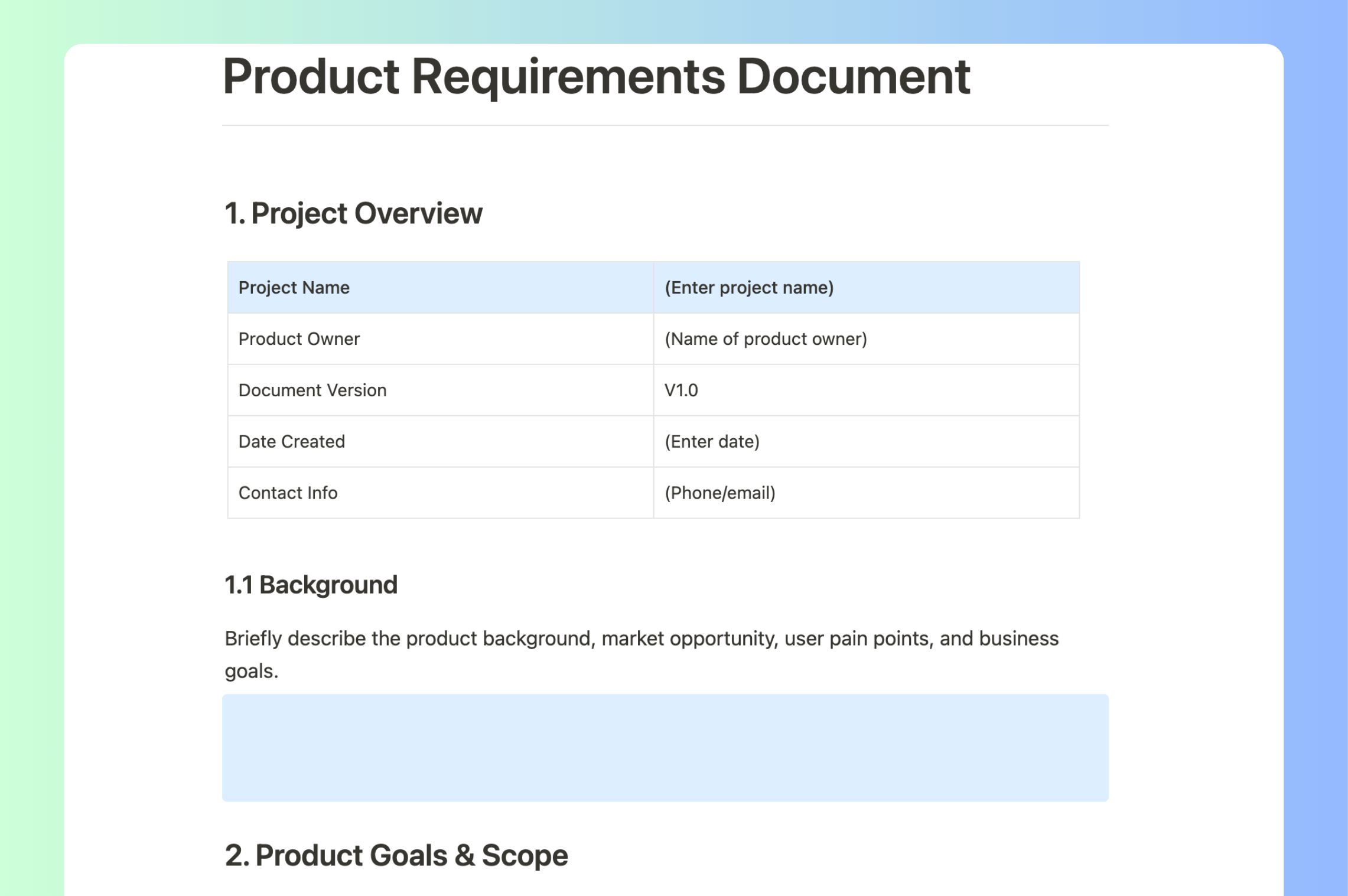
Its “Daily Time Blocking” template follows the exact logic of this article:
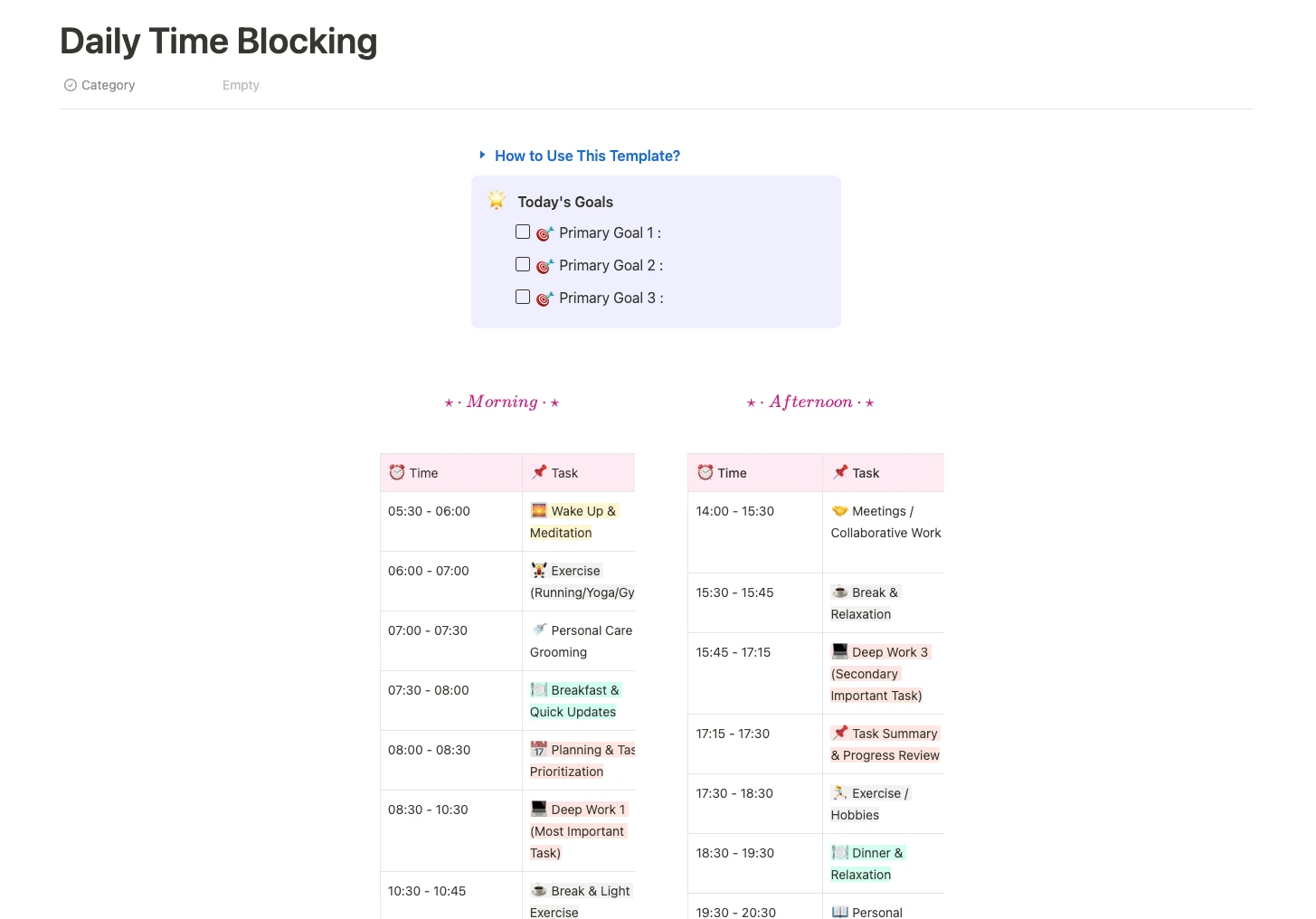
- In the morning, spend two minutes writing the day's most important task in the template. This is your two-minute start.
- Break a large task into small steps and assign them to morning and afternoon blocks. Once the task is broken down, starting no longer feels as intimidating.
- Set aside one uninterrupted block for focused work and use it for 25-minute Pomodoros. The timebox is immediately visible in your schedule.
- In the evening, write three lines in the reflection section: what you put off today, what you felt, and what your first step will be tomorrow. These are the notes from Method 7.
The template also has space for rest and exercise. You can overcome procrastination without filling every minute—the key is to spend your energy on the right things.
Use Buildin's Daily Time Blocking template for free and start today

Amara Elara
Specializes in visualizing complex processes and improving product education. Responsible for user support, product tutorials, and visual guides at Buildin, helping users improve tool adoption and overall productivity.